The Complete Guide to Building Your Own Gaming PC: Essential Components and Tips for Beginners

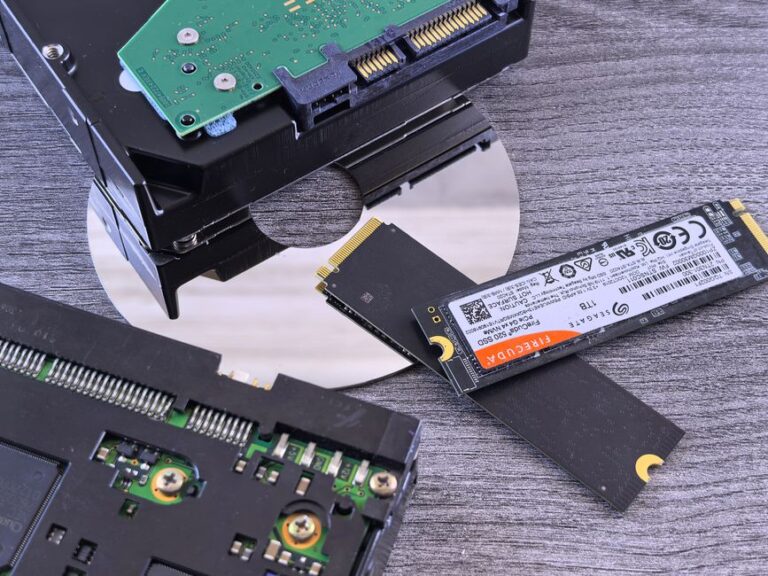
In the world of gaming, the choice between Solid State Drives (SSD) and Hard Disk Drives (HDD) can significantly impact your overall experience. This article delves into the key differences between SSDs and HDDs, exploring their performance, advantages, and disadvantages in gaming scenarios. Understanding these factors is crucial for gamers looking to optimize their systems for the best possible performance.
Before diving into the comparison, it’s important to define what SSDs and HDDs are. Both are types of storage devices used to store and retrieve data on computers, but they operate on different technologies.
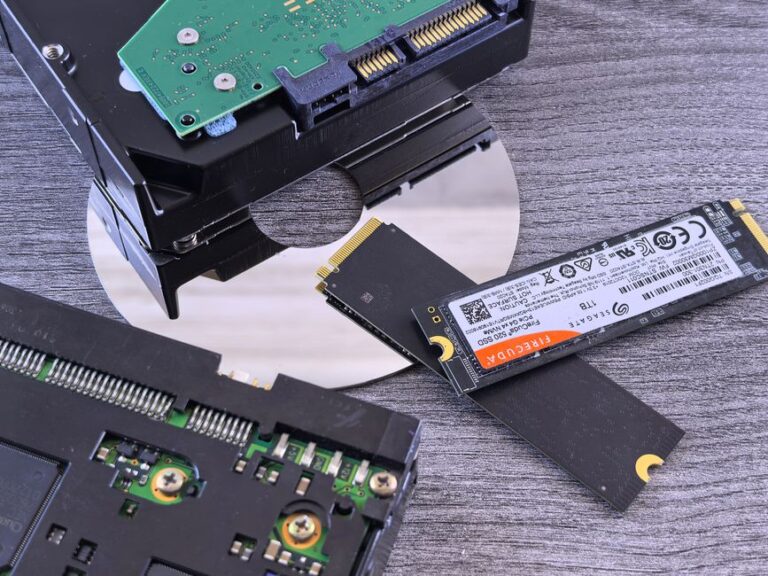
A Solid State Drive (SSD) uses flash memory to store data, which allows for faster read and write speeds. Unlike traditional drives, SSDs have no moving parts, making them more durable and reliable. This technology enables quicker boot times and faster loading of games.
A Hard Disk Drive (HDD), on the other hand, utilizes magnetic disks to read and write data. While they offer larger storage capacities at a lower cost compared to SSDs, their mechanical components make them slower in terms of read and write speeds. This can lead to longer load times in games and applications.
When it comes to gaming performance, the differences between SSDs and HDDs are pronounced. Here, we will explore how each type of storage affects various aspects of gaming.
One of the most noticeable differences between SSDs and HDDs is in loading times. Games installed on SSDs typically load significantly faster than those on HDDs. This is crucial for gamers who want to minimize waiting times and enhance their overall experience.
While the primary role of storage drives is to load games, they can also influence game performance indirectly. An SSD can help maintain higher frame rates by ensuring that game assets are loaded quickly.
Durability is another key factor when comparing SSDs and HDDs for gaming. Since SSDs have no moving parts, they are less prone to failure due to shocks or drops.
Cost is an essential aspect to consider when choosing between SSDs and HDDs. Generally, SSDs are more expensive per gigabyte than HDDs, which can impact your decision based on budget constraints.
When comparing the price per gigabyte, HDDs offer a significant advantage. They provide more storage at a lower cost, making them attractive for gamers who require large amounts of space for their game libraries.
For gamers looking to balance performance and cost, hybrid solutions such as SSHDs (Solid State Hybrid Drives) are available. These drives combine the benefits of SSDs and HDDs, offering faster speeds with larger storage capacities.
Choosing between an SSD and an HDD ultimately depends on your gaming needs and budget. For gamers who prioritize speed and performance, investing in an SSD is highly recommended. However, if storage capacity and cost are more important, an HDD may be the better choice.
For those who want the best of both worlds, consider a hybrid solution. This allows you to enjoy the fast loading times of an SSD while still having ample storage space for your games.
Yes, many gamers opt to use both an SSD for their operating system and frequently played games, while using an HDD for additional storage.
Yes, an SSD can significantly reduce loading times and improve overall game performance, especially in open-world and large games.
It depends on your game library. A minimum of 500GB is recommended, but 1TB or more is ideal for gamers with extensive collections.
Even for casual gamers, SSDs improve loading times and system responsiveness, making them a worthwhile investment.
Installing an SSD is similar to installing an HDD. It involves connecting the drive to your motherboard and power supply, and then formatting it through your operating system.
There are mainly three types of SSDs: SATA, NVMe, and M.2. SATA SSDs are the most common and affordable, while NVMe SSDs offer faster data transfer speeds. M.2 SSDs are compact and can use either SATA or NVMe protocols, depending on the model.
Yes, most modern gaming consoles support SSDs. Upgrading to an SSD can enhance load times and overall performance, providing a better gaming experience.
Consider factors such as speed, capacity, and budget. NVMe drives are generally faster but can be more expensive. Ensure the SSD is compatible with your system before purchasing.
The lifespan of an SSD is typically measured in terabytes written (TBW). Most consumer SSDs last for several years under normal usage conditions, making them a reliable choice for gamers.
While SSDs are faster, they tend to be more expensive per gigabyte compared to traditional HDDs. Additionally, they have a limited write cycle, although this is usually not a concern for average gamers.